
Broad complex tachycardia

No, that is not right. The appropriate choice is amiodarone 300 mg intravenously over 20–60 min.
In a stable patient, drug therapy is recommended before electrical therapy, and the only electrical therapy that might be considered would be synchronised cardioversion in a patient who had not responded to drug therapy or who developed adverse features later. Adenosine is used for the treatment of regular narrow-complex tachycardia and a beta blocker for rate control in atrial fibrillation or flutter. A 900 mg infusion of amiodarone over 24 h may be used after the initial 300 mg dose.
No, that is not right. The appropriate choice is amiodarone 300 mg intravenously over 20–60 min.
Adenosine should be used only if the broad complex tachycardia has been shown previously to be supraventricular in origin.
In a stable patient, drug therapy is recommended before electrical therapy, and the only electrical therapy that might be considered would be synchronised cardioversion in a patient who had not responded to drug therapy or who developed adverse features later. Adenosine is used for the treatment of regular narrow-complex tachycardia and a beta blocker for rate control in atrial fibrillation or flutter. A 900 mg infusion of amiodarone over 24 h may be used after the initial 300 mg dose.
No, that is not right. The appropriate choice is amiodarone 300 mg intravenously over 20–60 min.
In a stable patient, drug therapy is recommended before electrical therapy, and the only electrical therapy that might be considered would be synchronised cardioversion in a patient who had not responded to drug therapy or who developed adverse features later. Adenosine is used for the treatment of regular narrow-complex tachycardia and a beta blocker for rate control in atrial fibrillation or flutter. A 900 mg infusion of amiodarone over 24 h may be used after the initial 300 mg dose.
No, that is not right. The appropriate choice is amiodarone 300 mg intravenously over 20–60 min.
In a stable patient, drug therapy is recommended before electrical therapy, and the only electrical therapy that might be considered would be synchronised cardioversion in a patient who had not responded to drug therapy or who developed adverse features later. Adenosine is used for the treatment of regular narrow-complex tachycardia and a beta blocker for rate control in atrial fibrillation or flutter. A 900 mg infusion of amiodarone over 24 h may be used after the initial 300 mg dose.
Yes, that is right. The appropriate choice is amiodarone 300 mg intravenously over 20–60 min.
In a stable patient, drug therapy is recommended before electrical therapy, and the only electrical therapy that might be considered would be synchronised cardioversion in a patient who had not responded to drug therapy or who developed adverse features later. Adenosine is used for the treatment of regular narrow-complex tachycardia and a beta blocker for rate control in atrial fibrillation or flutter. A 900 mg infusion of amiodarone over 24 h may be used after the initial 300 mg dose.


References

See chapter 8 of the ALS manual for further explanation and examples of how to analyse cardiac rhythm from the ECG.
See chapter 11 of the ALS manual for further reading about the tachycardia algorithm.
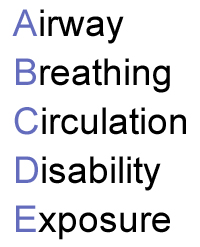
The 6-stage approach and the ABCDE approach
1. Is there any electrical activity?
2. What is the ventricular (QRS) rate?
3. Is the QRS rhythm regular or irregular?
4. Is the QRS width normal (narrow) or broad?
Any cardiac rhythm can be described accurately and managed safely and effectively using the first four stages.
5. Is atrial activity present? (If so, what is it: Typical sinus P waves? Atrial fibrillation? Atrial flutter? Abnormal P waves?)
6. How is atrial activity related to ventricular activity? (e.g 1:1 conduction, 2:1 conduction, etc, or no relationship)


The tachycardia algorithm
The tachycardia algorithm is available in chapter 11 of the ALS manual.
